CBAM Expansion 2026: What the Proposed Downstream Product List Means for Exporters
CBAM Expansion 2026: What the Proposed Downstream Product List Means for Exporters
An exporter’s guide to checking product coverage, responding to EU customers, and preparing carbon data without treating a proposal as law.
Last reviewed: 18 September 2026
The short answer: The EU is considering extending its Carbon Border Adjustment Mechanism (CBAM) to more products made with steel and aluminium, including selected machinery, equipment and household goods. But the expanded product list is not yet in force. An exporter’s first task is to check whether its product is covered today, appears in a proposed list, or is in neither category. The answer depends on the product’s EU customs classification—not simply on whether it contains metal. (europarl.europa.eu)
What changed in September 2026?
On 15 September 2026, the European Parliament adopted its position for negotiations on a wider CBAM. Members supported adding downstream products—goods made further along the manufacturing chain from basic steel or aluminium—and strengthening rules intended to prevent avoidance. Parliament and EU member states must still negotiate the final legislation. A parliamentary vote on a negotiating position does not mean the proposed goods are already subject to CBAM. (europarl.europa.eu)
The proposed lists are not identical:
| Stage | Proposed downstream coverage | Status |
|---|---|---|
| European Commission | 180 selected steel- and aluminium-intensive products | Legislative proposal |
| Council of the EU | The Commission’s list plus 200 additional products | Negotiating position |
| Parliament’s environment committee | A list of 457 products | Basis for Parliament’s position; final scope subject to negotiation |
These figures describe different versions of a proposal, not three successive changes to the law. The Commission proposed 1 January 2028 for the downstream extension to apply, but the date and final list must be checked against the legislation ultimately adopted. (eprs.europarl.europa.eu)
Is my product covered now—or only being considered?
Start with the product’s CN code. This is the EU’s customs classification code; its first six digits align with the international HS system, but the EU classification provides more detail. Check the code used for the good as it enters the EU, then compare it with the product codes in the current CBAM legislation and, separately, the proposed amendments. Where a proposal says “ex” before a code, it covers only the goods matching the accompanying description—not everything under that code. If classification is uncertain, resolve it with the EU importer or a customs specialist. (taxation-customs.ec.europa.eu)
Consider two examples:
- Steel bolts: Iron or steel screws, bolts and nuts under heading 7318 already appear in the existing CBAM product list. A supplier should not assume that “finished goods” are all waiting for the expansion. The precise classification still matters. (eur-lex.europa.eu)
- Household washing machines: Selected washing-machine codes, including 8450 11, appear in the Commission’s proposed downstream list. Their appearance there does not make them covered by the current rules. (eur-lex.europa.eu)
The same caution applies to headlines about solar products, heat pumps or automotive parts. An industry label is too broad to establish coverage: the exact imported good, its CN code, the wording of any “ex” entry, and the final adopted list are what matter. (eur-lex.europa.eu)
Who has to comply: the importer or the exporter?
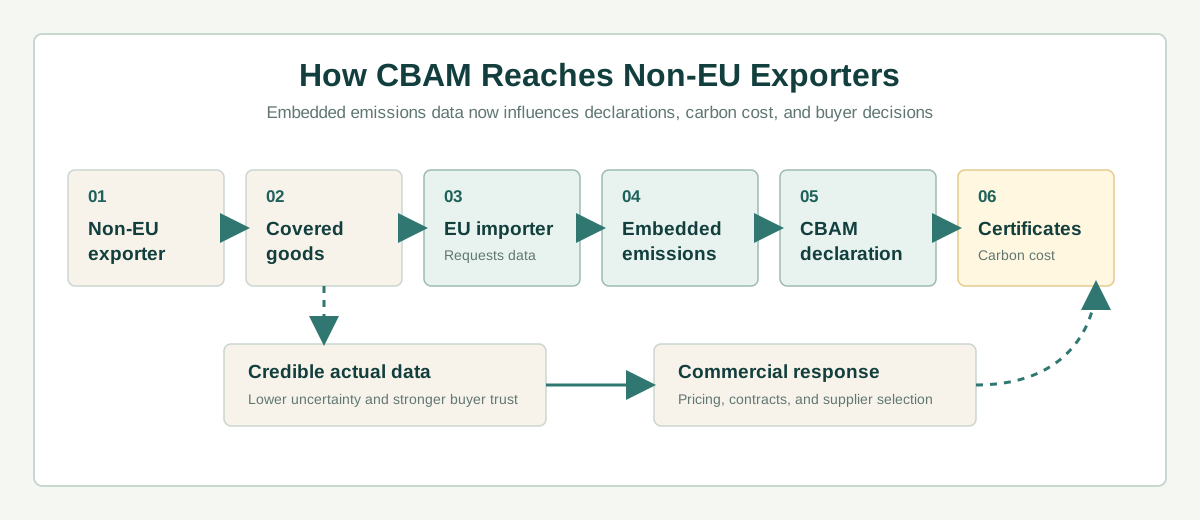
Under the current CBAM regime, the formal EU obligations fall primarily on the EU importer or its indirect customs representative, where applicable. The EU’s current mass-based exemption is generally assessed at 50 tonnes of covered goods per importer per year; it is not a 50-tonne allowance for each non-EU supplier. Exporters are nevertheless central to the process because their EU customers may need reliable information from the factory that made the goods. (taxation-customs.ec.europa.eu)
This is also why exporters should be careful with claims that the September vote “reduced the threshold from 50 tonnes to 5 tonnes.” The Commission’s current guidance still states a 50-tonne importer threshold. Proposals concerning anti-circumvention should not be presented as an across-the-board change to that existing exemption. (taxation-customs.ec.europa.eu)
What carbon data should an exporter prepare?
There is no need to calculate a full product carbon footprint for every item mentioned in a draft list. A more useful approach is to build a readiness file for products that are covered now and those with credible exposure to the proposed expansion.
Start with information you can substantiate:
- Product and classification: product description, model or SKU, export documents, EU CN code and any uncertainty about that classification.
- Material composition: the quantity and source of relevant steel and aluminium inputs, with a version-controlled bill of materials (BOM). A BOM is simply the list of materials and quantities used to make the product.
- Production traceability: the factory and production period, output quantities, and records connecting purchased material to the goods produced.
- Emissions evidence, where required: relevant production and supplier records, calculation assumptions, and any available verified emissions information. Record gaps explicitly rather than filling them with unexplained estimates.
This is a preparation file, not a claim that every field above is already mandatory for every proposed downstream product. The Commission’s proposal contemplates information on downstream goods’ material composition and their relevant inputs; the applicable calculation and reporting requirements will depend on the final rules. For goods already covered, use the current CBAM methodology and Commission guidance. (eur-lex.europa.eu)
A conventional PCF or ISO 14067 report is not automatically a CBAM emissions report. It may contain useful underlying data, but CBAM has its own rules for which production emissions and inputs count, how they are calculated, and when actual values require verification. Similarly, an EU importer may use applicable Commission default values in certain circumstances; an exporter should not promise that submitting actual data will always lower its customer’s CBAM cost. (taxation-customs.ec.europa.eu)
A practical response when an EU customer asks about the expansion
If a customer emails, “Will our products be affected by the new CBAM list?”, avoid an immediate yes-or-no based on the product name. A useful reply would establish:
- Which exact goods and EU CN codes are involved?
- Are those codes covered under the current rules, or found only in a proposed list?
- Is the customer asking for data for an existing CBAM declaration, or assessing a possible future requirement?
- Which factory, production period and materials should the data cover?
Then send a short status statement: “covered under current rules,” “identified in a proposal—final scope pending,” or “not identified in the lists reviewed.” Include the date of that assessment. This gives the customer something actionable without presenting an unsettled proposal as a compliance verdict. (europarl.europa.eu)
What should exporters do next?
First, screen your products by CN code. Prioritise goods already covered, followed by products named in the proposed lists. Do not assume every product containing steel or aluminium is included. Second, identify the factory and material records you could actually provide. Third, agree with each EU customer what information they need and when. For goods already in scope, this matters now: the first annual CBAM declaration for 2026 imports is due by 30 September 2027 under the current timetable. For goods only in a proposed expansion, monitor the final legislation before treating a proposed start date or product list as a binding obligation. (taxation-customs.ec.europa.eu)
The most valuable preparation is not a rushed emissions number. It is a clear record linking the imported product, its classification, the factory, its materials and the evidence behind any emissions data. That record will make both present-day customer requests and a possible future expansion easier to handle.
Need help organising that evidence? ClimateSeal can help structure product, factory, supplier and emissions information so your team can respond to EU customers with a traceable data package.
This article is general information, not legal or customs advice. Confirm product classification and obligations against the current EU rules and, where necessary, with your importer or adviser.
Climate Seal Resources
Do you find our content useful? Get updated once a week
Receive a concise weekly digest of new articles, regulatory insights, and practical guidance.

